When shearing stainless steel strip with circular blades, should you adjust the blade or replace it when the edge develops burrs?
Jun 02, 2026
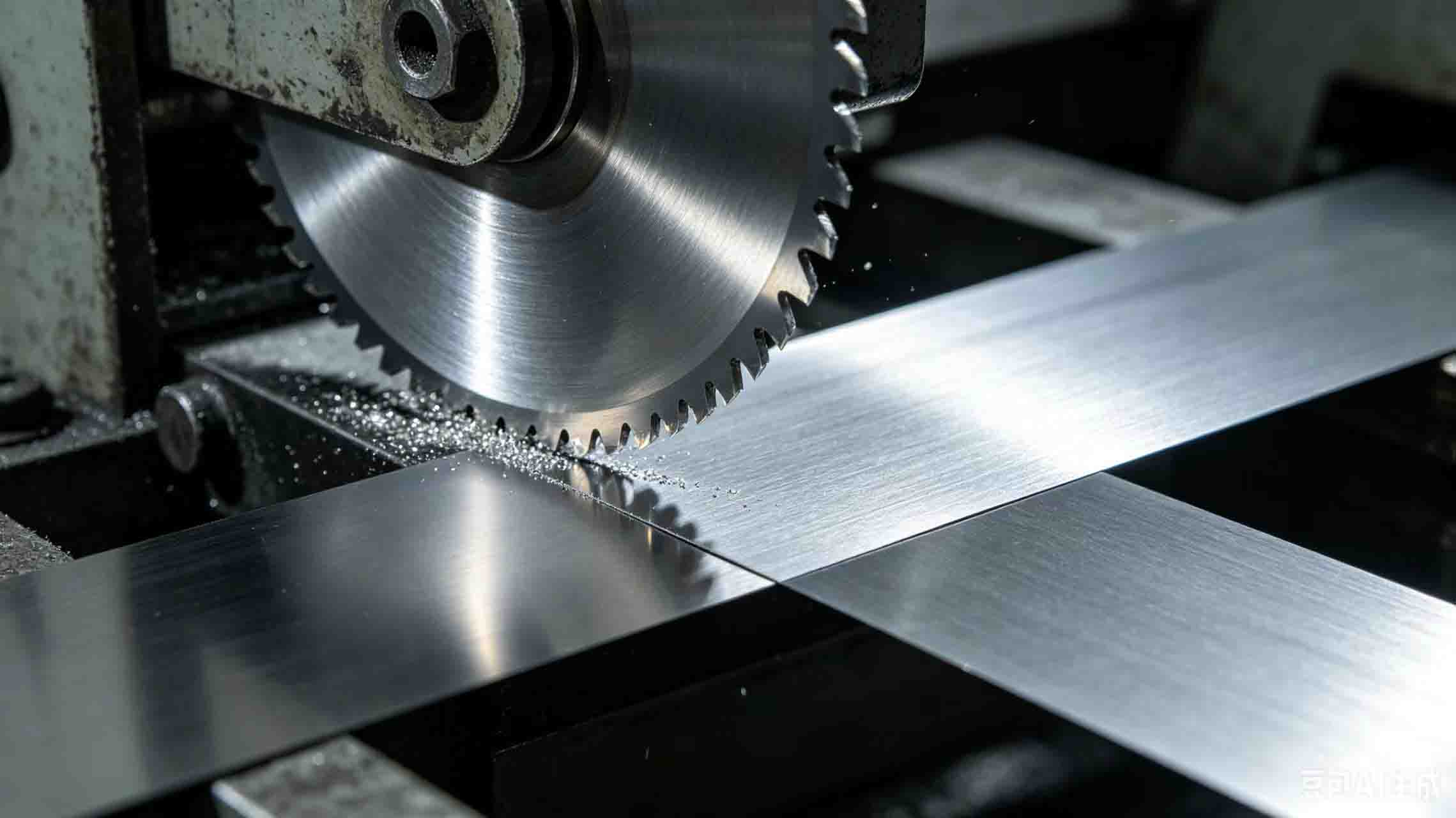
In stainless steel strip slitting production, the most troublesome issue when circular blades shear stainless steel strip is edge burrs. Faced with burrs, operators often face a dilemma: adjusting the blade might allow continued use, but they fear it will only address the symptom; replacing the blade directly is costly. Mingbai Mechanical Tool Technology Co., Ltd., based on years of stainless steel slitting experience, helps you establish a judgment standard: when only adjustment is needed, and when replacement is necessary.
1. Three Root Causes of Burrs
Stainless steel strip has high toughness and severe work hardening, making burr formation more complex than with ordinary carbon steel. There are three main categories:
· Parameter burrs: Caused by improper settings of blade gap, overlap, tension, etc. In this case, the blade itself is intact, and adjustment is sufficient.
· Wear burrs: The edge naturally wears and becomes rounded, reducing sharpness. In this case, resharpening or replacement is needed.
· Damage burrs: The edge has chipping, tiny nicks, or coating peeling. In this case, replacement or factory repair is necessary.
2. Three-Step Judgment Method: Adjust or Replace?
Step 1: Stop and inspect the edge
Use a magnifying glass or naked eye to carefully observe the edge condition of the circular blade. If the edge is bright without nicks and has no obvious wear land (white line width < 0.1mm), the blade itself is fine and the problem lies in parameters. If you find edge burrs accompanied by chipping, the blade is damaged and should be replaced.
Step 2: Analyze the burr morphology
· Burrs are uniform and fine, appearing on both sides of the strip → possibly excessive gap or dull blade; first try reducing the gap by 0.01-0.02mm.
· Burrs appear only on one side of the strip → axial misalignment of upper and lower blades; adjust the axial position.
· Burrs appear in periodic wave-like pattern → excessive runout of the blade or blade shaft; measure runout; if runout > 0.01mm, resharpening or replacement is needed.
· Burrs have a white base with extrusion marks → gap too small; increase the gap.
Step 3: Trial cut verification
After adjusting parameters, make a trial cut. If burrs are significantly reduced or disappear, burr adjustment for stainless steel strip slitting is effective and the blade can continue to be used. If burrs persist after adjustment, or if new chipping appears on the edge, it indicates that the circular blade has reached its wear limit and the blade should be replaced.
3. Four Situations Requiring Blade Replacement
1. The edge has visible chipping (width > 0.2mm)
2. The edge wear land width exceeds 0.3mm
3. Burrs cannot be eliminated after resharpening
4. Cracks on the blade surface or large-area coating peeling
4. Three Key Parameters for Adjustment
· Gap: Recommended gap for stainless steel strip is 6%-10% of material thickness. Too narrow produces white extruded burrs; too wide produces tearing burrs.
· Overlap: Generally 30%-50% of material thickness. Insufficient overlap fails to cut through; excessive overlap accelerates wear.
· Lubrication: Stainless steel slitting requires sufficient cutting fluid; oil mist lubrication is recommended, with flow rate 10-20 ml/h.
5. Precautions After Blade Replacement
Even after replacing with a new blade, adjustment after circular blade replacement cannot be neglected. The outer diameter of new blades may differ slightly, so the gap must be re-measured and reset. It is recommended to set the theoretical value with a feeler gauge first, then fine-tune through trial cutting.
6. Mingbai Technology's Recommendations
Mingbai Mechanical Tool Technology Co., Ltd. advises customers to establish the principle of "adjust first, replace with justification." Inspect the edge every shift and record the trend of burr changes. When the frequency of adjustments increases (e.g., needing adjustment every 2 hours), it indicates the blade is approaching the end of its life, and replacement or factory resharpening should be arranged.
For life judgment of circular blades for stainless steel strip, we offer free on-site diagnostic services to help you accurately distinguish between "should adjust" and "should replace."
Conclusion
When shearing stainless steel strip with circular blades and edge burrs appear, you don't necessarily need to replace the blade immediately. First inspect the edge condition, then analyze the burr morphology, and finally verify through trial cutting. In most cases, reasonable parameter adjustment can solve the problem. However, when the edge has chipping or severe wear, decisive blade replacement is actually the most economical approach. Mingbai Technology is willing to provide professional judgment support.
Website: www.mingbaiblade.com

 بريد إلكتروني
: Mb@mingbaiblade.com
بريد إلكتروني
: Mb@mingbaiblade.com Tel.: +86-13855519988


 شبكة IPv6 مدعومة
|
خريطة الموقع
|
Xml
|
سياسة الخصوصية
شبكة IPv6 مدعومة
|
خريطة الموقع
|
Xml
|
سياسة الخصوصية


 ar
ar